My Country, Right or Wrong!
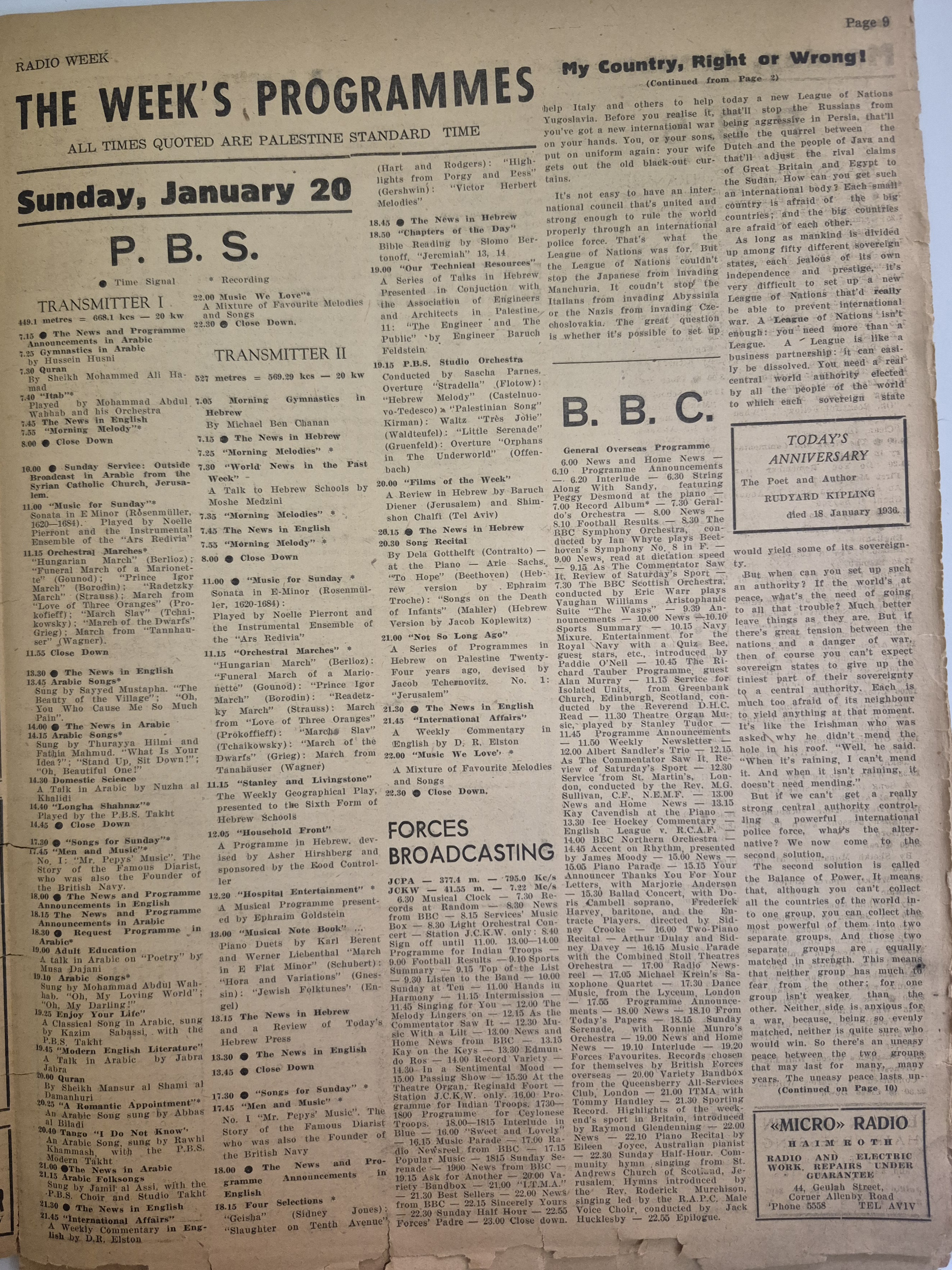
(continued from Page 2)help Italy and others to help Yugoslavia. Before you realise it, you've got a new international war on your hands. You, or your sons, put on uniforms again: your wife gets out the old black-out curtains.
It's not easy to have an international council that's united and strong enough to rule the world properly through an international police force. That's what the League of Nations was for. But the League of Nations couldn't stop the Japanese from invading Manchuria. It couldn't stop the Italians from invading Abyssinia or the Nazis from invading Czechoslovakia. The great question is whether it's possible to set up today a new League of Nations that'll stop the Russians from being aggressive in Persia, that'll settle the quarrel between the Dutch and the people of Java and that'll adjust the rival claims of Great Britain and Egypt to the Sudan. How can you get such an international body? Each small country is afraid of the big countries; and the big countries are afraid of each other.
As long as mankind is divided up among fifty different sovereign states, each jealous of its own independence and prestige, it's very difficult to set up a new League of Nations that'll really be able to prevent international war. A League of Nation isn't enough: you need more than a League. A League is like a business partnership: it can easily be dissolved. You need a real central world authority elected by all the people of the world to which each sovereign state would yield some of its sovereignty.
But when can you set up such an authority? If the World's at peace, what's the need of going to all that trouble? Much better leave things as they are. But if there's great tension between the nations and a danger of war, then of course you can't expect sovereign states to give up the tiniest part of their sovereignty to a central authority. Each is much too afraid of its neighbour to yield anything at that moment. It's like the Irishman who was asked why he didn't mend the hole in his roof. "Well", he said. "When its raining, I can't mend it. And when it isn't raining, it doesn't need mending."
But if we can't get a really strong central authority controlling a powerful international police force, what's the alternative? We now come to the second solution.
The second solution is called the Balance of Power. It means that, although you can't collect all the countries of the world into one group, you can collect the most powerful of them into two separate groups. And thos e two separate groups are equally matched in strength. This means that neither group has much to fear from the other: for one group isn't weaker than the other. Neither side is is anxious for a war, because being so evenly matched, neither is quite sure who would win. So there's an uneasy peace between the two groups that may last for many, many years. The uneasy peace lasts un-
9